
PCSing or moving to Northern Virginia from out of state? You can close without being here, you choose the settlement agent, and VA loans limit what you can be charged. What to line up first.
Planning a closing?
Get a local title quote for Virginia, Maryland, or Washington DC.
Get a Title Quote →If you are PCSing to the Pentagon, Fort Belvoir, or Quantico — or moving to Northern Virginia from another state for any reason — you are buying a house you may have stood in exactly once, on a timeline someone else controls, from an address several time zones away.
The title and settlement side of that is very manageable. It just has to be set up deliberately, because the default assumptions all assume you are local.
You do not have to be here to close
Virginia recognizes electronic notarization performed over video. The definition of "satisfactory evidence of identity" in Va. Code § 47.1-2 states that for an electronic notarization it "may be based on video and audio conference technology," subject to the communication standards in § 19.2-3.1, with identity confirmed by personal knowledge, a credible witness, or credential analysis of an unexpired government-issued photo ID.
In practice you have three ways to sign:
- Remote online notarization. You sign on video from wherever you are.
- A mail-away or courier package. Documents are sent to you and notarized locally — on a base, at a legal assistance office, or at a bank.
- Power of attorney. Someone you designate signs on your behalf.
Which one you use is not purely your choice: your lender and the title underwriter both have a say, and some lenders restrict remote notarization on certain loan products. Ask early, not in the final week, because the answer changes what has to be prepared and when.
Your military power of attorney is valid here
This one trips people up because the Virginia POA form looks different from what base legal assistance produced.
"A military power of attorney — (1) is exempt from any requirement of form, substance, formality, or recording that is provided for powers of attorney under the laws of a State; and (2) shall be given the same legal effect as a power of attorney prepared and executed in accordance with the laws of the State concerned."
— 10 U.S.C. § 1044b
So a POA drafted by a military legal assistance attorney does not have to match Virginia's form to be effective in Virginia.
One honest caveat: that statute binds states. It does not bind your lender or the title underwriter, both of which can impose their own requirements about how a POA is used in a financed transaction — whether it is specific enough, how recently it was executed, whether the principal can be reached to confirm. Send the POA to your settlement agent as early as you have it so it can be run past the underwriter while there is still time to fix a problem.
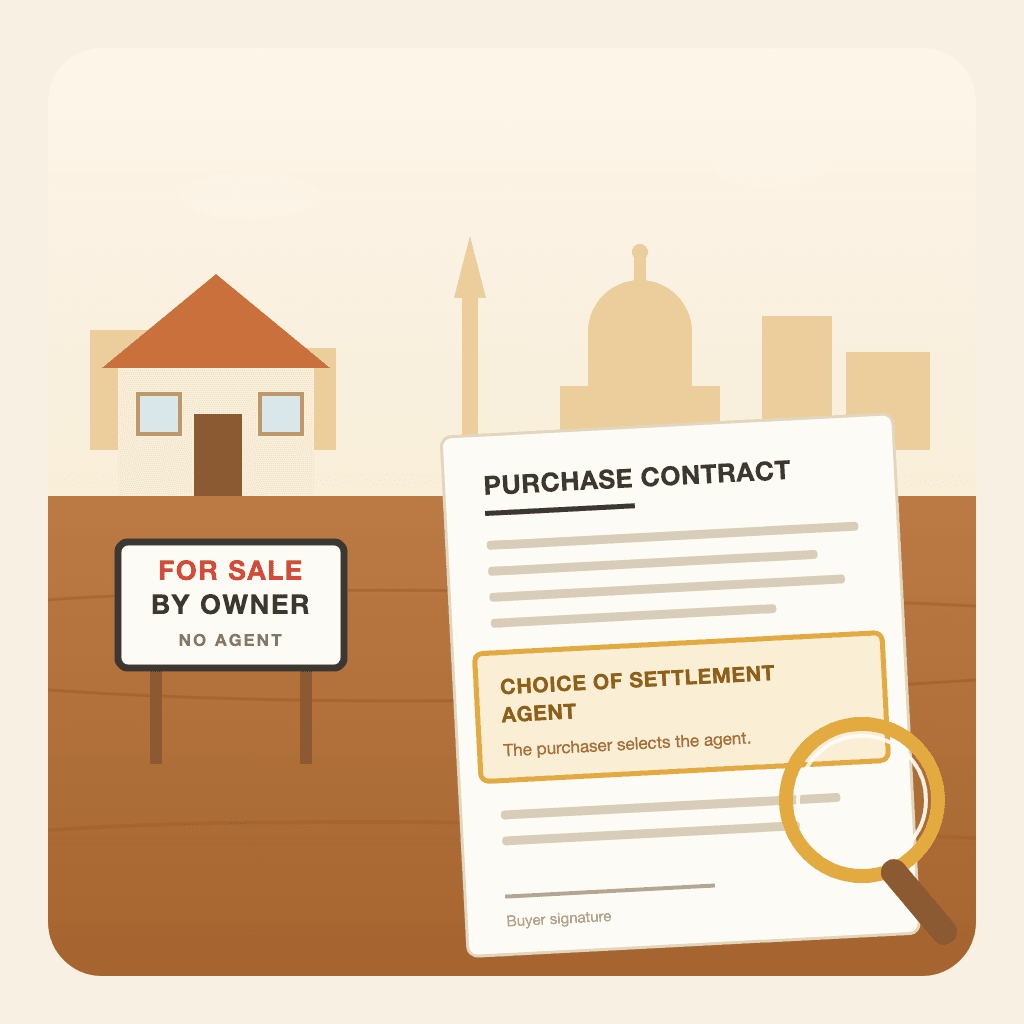
You choose the settlement agent, not the builder or the relocation company
Relocating buyers get steered more than anyone. A builder has a preferred title company. A relocation management company has a network. Neither of them decides this:
"A purchaser or borrower in a transaction related to real estate in the Commonwealth shall have the right to select the settlement agent to provide escrow, closing, or settlement services in connection with the transaction. The seller in such a transaction may not require the use of a particular settlement agent as a condition of the sale of the property."
— Va. Code § 55.1-1006
You may be offered an incentive to use a preferred provider, and that is legitimate — a builder credit is a real thing you can take. The point is that it has to be an offer you weigh, not a condition you are told about after the fact. Price it against an independent quote before you accept.
If you are using a VA loan, there are limits on what you can be charged
VA-guaranteed loans restrict the fees a veteran can pay at closing:
"No charge shall be made against, or paid by, the borrower incident to the making of a guaranteed or insured loan other than those expressly permitted under paragraph (d) or (e) of this section, and no loan shall be guaranteed or insured unless the lender certifies to the Secretary that it has not imposed and will not impose any charges or fees against the borrower in excess of those permissible."
— 38 CFR § 36.4313(a)
Paragraph (d) then sets out a schedule of items for which "the veteran may pay reasonable and customary amounts." The practical effect is that the settlement fee column on a VA purchase is not a free-for-all, and your lender has to certify that it has not exceeded what is permitted.
A settlement agent who handles VA loans regularly will already know which of its own line items are allowable. One who does not will hand you a fee sheet that has to be unwound late.
The seller-identity question matters more when you have never been here
Virginia puts a duty on the settlement agent:
"Prior to settlement, the settlement agent shall exercise ordinary care to reasonably ascertain the identity of a seller of real property."
— Va. Code § 55.1-903
Seller impersonation is a real fraud pattern, and it targets exactly the setup a relocation creates: a remote buyer, a property nobody in the transaction has a long relationship with, and a fast timeline. Ask how your settlement agent verifies the seller. A good one answers immediately.
Wire fraud is the risk that actually costs people the down payment
Relocating buyers are the preferred target for wire fraud, because a remote closing is full of emailed documents and nobody finds it odd that you have never met anyone in person.
The rule is simple and there are no exceptions worth making:
- Call to verify wire instructions before sending anything, using a phone number you obtained independently — from the company's website or an earlier document — never a number in the email containing the instructions.
- Treat any change to wire instructions as fraudulent until proven otherwise. Legitimate last-minute changes are rare. Fraudulent ones are common.
- Confirm receipt by phone after you send.
The timeline problems specific to a relocation
- Orders slip. Build a settlement date that can move, and tell your settlement agent the date is provisional the moment you know it is.
- One spouse arrives first. Decide early who is signing what, and whether a POA is needed.
- HOA and condo resale documents are common across Northern Virginia and the association controls how fast they arrive. Start them immediately.
- Time zones and deployment schedules compress the window for signing. If you are somewhere with limited connectivity, say so up front — it changes whether remote notarization is realistic.
- Money movement takes longer than you think from an out-of-state or overseas bank.
Get the numbers before you commit
If you are still comparing neighborhoods or deciding whether to buy now or at the next duty station, start with the arithmetic: the Virginia closing cost calculator will get your buyer-side costs in range, and the title insurance calculator will estimate the title premium and settlement fees specifically.
Talk it through before the orders are final
The relocations that go smoothly are the ones where the title side was set up before the contract was ratified, not after.
Will Rapuano handles title and settlement across Northern Virginia with Pruitt Title. If you are PCSing in, moving from out of state, or representing a client who is, get in touch and bring the timeline you actually have — including the parts that are not confirmed yet.
This page explains how title, settlement, and remote closing work in Virginia. It is general information, not legal advice about your transaction.
Frequently Asked Questions
Can I buy a house in Northern Virginia without being there?
Yes. Between remote online notarization, mail-away packages, and powers of attorney, out-of-state and overseas buyers close on Northern Virginia homes routinely. Confirm with your lender early which method it will accept, because that constraint usually comes from the loan rather than from Virginia law.
Does Virginia allow remote online notarization?
Yes. Va. Code § 47.1-2 provides that for an electronic notarization, satisfactory evidence of identity may be based on video and audio conference technology, subject to the standards it sets out for confirming who you are.
Will a military power of attorney work for a Virginia closing?
Under 10 U.S.C. § 1044b a military power of attorney is exempt from state form requirements and must be given the same legal effect as one prepared under state law. Your lender and the title underwriter may still have their own requirements for using a POA in a financed purchase, so provide it as early as possible rather than presenting it at settlement.
Can a builder or relocation company require me to use their title company?
No. Va. Code § 55.1-1006 gives the purchaser the right to select the settlement agent and prevents a seller from requiring a particular one as a condition of sale. A builder may legitimately offer an incentive for using its preferred provider — that is an offer to evaluate, not a requirement, and it is worth pricing against an independent quote.
What can I be charged at closing on a VA loan?
38 CFR § 36.4313 limits charges to those expressly permitted, and requires the lender to certify it has not exceeded them. Paragraph (d) sets out the schedule of items a veteran may pay reasonable and customary amounts for. Ask your settlement agent to identify which of its line items are VA-allowable.
How do I avoid wire fraud when closing from out of state?
Verify wire instructions by phone before sending, using a number you sourced independently rather than one printed in the email. Treat any change to previously issued instructions as fraudulent until you have confirmed it by voice, and call to confirm receipt after sending.
Ready to Get a Title Quote?
Send your transaction details through DMV Title Guy. Will can answer initial questions and, when eligible, refer the request to Pruitt Title LLC for review.