
Title insurance protects against hidden ownership problems — but who exactly does each policy cover? Here's the straight answer for buyers and sellers in the DMV.
Planning a closing?
Get a local title quote for Virginia, Maryland, or Washington DC.
Get a Title Quote →Every real estate closing in Virginia, Maryland, and DC involves at least one title insurance policy — sometimes two. Most buyers sign for them without fully understanding what they're paying for or who exactly they're protecting.
Here's the direct answer: title insurance protects whoever holds the policy. The question is which policy you have, and whether it covers you.
Two Policies, Two Different Beneficiaries
At most residential closings in the DMV, two separate title insurance policies come into play. They cover different parties and serve different purposes.
Lender's Title Insurance — Protects the Bank
When you take out a mortgage, your lender requires a lender's title insurance policy (also called a loan policy or mortgagee policy). This is standard in virtually every financed purchase.
Who it protects: Your mortgage lender — not you.
The lender is putting up hundreds of thousands of dollars secured by a property they don't own. If a title defect surfaces after closing — an undiscovered lien, an old ownership dispute, a recording error — the lender's policy covers the bank's financial interest up to the outstanding loan balance.
You're paying the premium for this coverage at closing. But the protection runs to the bank.
Coverage timeline: The lender's policy stays active until the loan is paid off. As your balance decreases, the coverage amount decreases with it. Once the mortgage is satisfied, the policy expires.
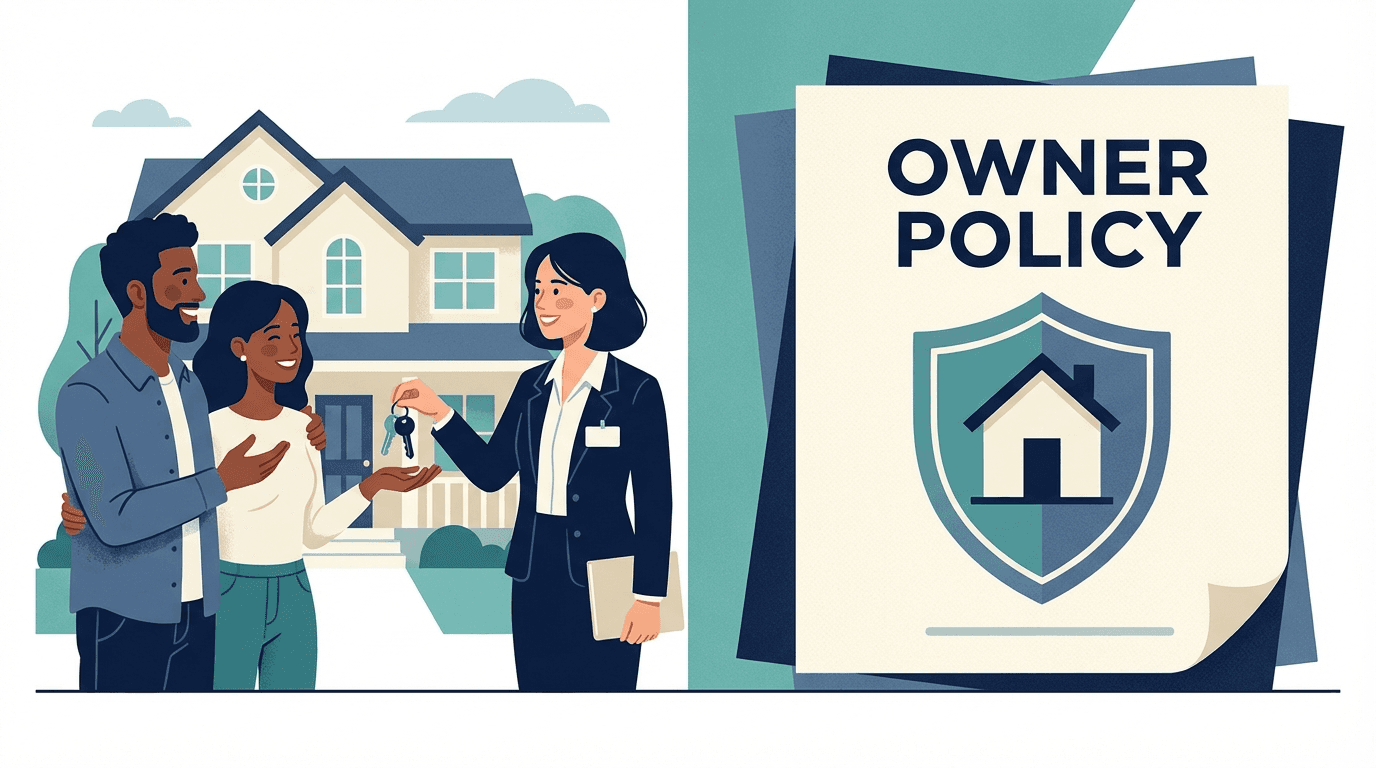
Owner's Title Insurance — Protects You
Owner's title insurance (also called an owner's policy) is the coverage that protects the buyer — the actual homeowner.
Who it protects: You, for as long as you own the property.
An owner's policy covers your equity in the home. If someone challenges your ownership after closing — a previously undisclosed heir, a forged document in the chain of title, a tax lien the seller failed to disclose — the policy covers your legal defense costs and potential losses.
Coverage timeline: Unlike the lender's policy, owner's coverage doesn't expire when you pay off the mortgage. It stays in effect for the entire time you hold title, and in many cases extends to your heirs when the property is inherited.
Does the seller get title insurance?
Not typically at the time of purchase — sellers usually don't take out new policies. However, if the seller purchased owner's title insurance when they bought the home, they may still be covered by that policy for their ownership period. The policy doesn't transfer to the new buyer; you need your own.
Does title insurance cover the full value of the home?
An owner's policy typically covers up to the purchase price of the property (or higher with enhanced coverage that tracks appreciation). A lender's policy covers up to the outstanding loan balance.
Can I shop for title insurance?
Yes. In Virginia and Maryland, title insurance rates are filed with the state, so the underlying premium calculations are standardized. But not all title companies are the same — service, experience, and how they handle a claim matters. Shop based on both price and reputation.
How long does the title search take?
A standard title search in the DMV typically takes 5–7 business days. Rush searches are available in most cases. Your title company orders the search when they receive your contract.
What happens if a title defect is found before closing?
Your title company handles it. Most title issues that surface during the search are curable — old liens that need to be paid off, recording errors that need correction, gaps in the chain of title that require documentation. A good title company clears defects as part of the normal closing process.
What if a title defect surfaces after closing?
That's exactly what title insurance is designed for. Contact your title company immediately. Your policy is still in effect, and the insurer will either defend your title or compensate you for covered losses.
The Bottom Line
Title insurance protects whoever holds the policy — and the two policies at a residential closing protect two different parties.
The lender's policy, which you're almost certainly paying for, protects the bank. The owner's policy, which is optional, protects you.
That distinction matters. The coverage you're required to buy doesn't actually cover you. The coverage that does protect you is the one that requires a separate decision at closing.
For buyers in Northern Virginia, Maryland, and DC — markets with active fraud cases, high transaction volume, and complex title histories — owner's title insurance is a straightforward way to protect what is almost certainly your largest asset.
Questions before your closing? Pruitt Title handles settlements across the DMV and is happy to walk through your specific transaction.
Pruitt Title is a full-service title and settlement company serving buyers, sellers, agents, and lenders across Northern Virginia, Maryland, and DC. Reach Will Rapuano at (703) 859-1467 or wrapuano@pruitt-title.com. Office: 1900 Gallows Rd Suite 230, Vienna VA 22182. More at dmvtitleguy.io.
Get title insurance for your Northern Virginia property — see our Vienna and Herndon services.
DMV title services: Vienna, VA | Springfield, VA | Bethesda, MD
Ready to Get a Title Quote?
Send your transaction details through DMV Title Guy. Will can answer initial questions and, when eligible, refer the request to Pruitt Title LLC for review.