
Planning a closing?
Estimate title costs for Virginia, Maryland, or Washington DC.
Estimate Title Costs →Title insurance is a one-time premium — you pay it at closing, and it covers you for as long as you own the property. But buyers often get surprised by the number on their closing disclosure because no one explained how Virginia's pricing actually works before they got to the table.
Here's the plain-English version: what Virginia title insurance costs, why rates can differ between companies, and what real dollar amounts look like at common Northern Virginia purchase prices.
How Virginia Title Insurance Is Priced
Virginia title insurance rates are filed with the State Corporation Commission (SCC). Each title insurance company files its own rate schedule, and Virginia law lets title insurers and agents negotiate the rate with a buyer (Va. Code § 38.2-4608).
That means the premium is worth comparing too. The SCC's own title insurance guide tells buyers to shop around and to ask about reissue credits and other discounts.
What does vary between title companies is the settlement fee — the charge for conducting the closing, preparing documents, coordinating payoffs, and handling recordation. That's where comparison shopping has real impact. A $200–$400 difference in settlement fees between title companies is common.
This is also why you should choose a title company based on competence, communication, and track record — not on the hope of finding a lower insurance premium.
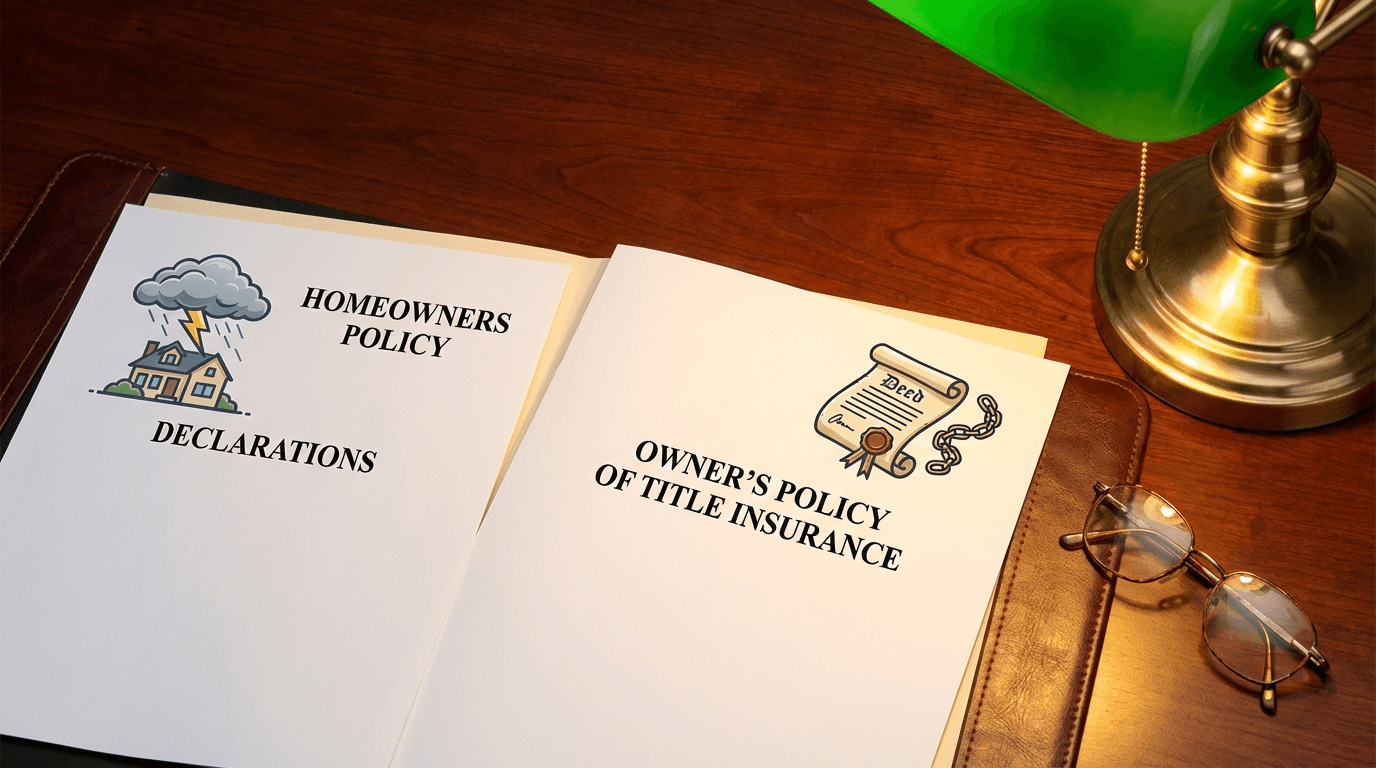
When you buy a home with a mortgage in Virginia, you'll typically need two title insurance policies:
Lender's Title Insurance Policy
Required by virtually every mortgage lender. Protects the lender's interest in the property up to the loan amount. Paid by the buyer (or seller, depending on contract negotiation — in Northern Virginia, it's nearly always the buyer). Learn more about what lender's title insurance covers.
Owner's Title Insurance Policy
Protects you as the buyer. Covers the full purchase price. Not legally required in Virginia, but strongly recommended — and commonly purchased at closing because of the simultaneous issue discount.
The Simultaneous Issue Discount
When both policies are purchased at the same closing, the lender's policy receives a significant premium discount — in Stewart Title's published Virginia schedule, it becomes a flat $200. This makes buying both at once the economically rational choice for nearly every financed purchase.
Real Dollar Examples: Stewart Title's Published Virginia Rates
$400,000 Purchase Price
| Policy | Stewart premium (before discounts) |
|---|---|
| Owner's Policy ($400K) | $1,689.50 |
| Lender's Policy (simultaneous issue, $320K loan) | $200 |
| Total Title Insurance | $1,889.50 |
$600,000 Purchase Price
| Policy | Stewart premium (before discounts) |
|---|---|
| Owner's Policy ($600K) | $2,472.50 |
| Lender's Policy (simultaneous issue, $480K loan) | $200 |
| Total Title Insurance | $2,672.50 |
$800,000 Purchase Price
| Policy | Stewart premium (before discounts) |
|---|---|
| Owner's Policy ($800K) | $3,222.50 |
| Lender's Policy (simultaneous issue, $640K loan) | $200 |
| Total Title Insurance | $3,422.50 |
$1,000,000+ Purchase Price
At $1,000,000, Stewart's standard owner's premium is $3,972.50, and the rate drops to $2.49 per $1,000 above that. The lender's policy issued with it is still $200.
Note: These figures come from Stewart Title's schedule effective July 1, 2025. Other underwriters file their own rates, and Virginia rates can be negotiated. Your exact premium depends on the underwriter, the specific purchase price, and the loan amount. Get a precise quote for your transaction:
→ Run Your Virginia Title Quote
What's Included in Your Total Title Bill
The title insurance premium is only part of what you'll see on your closing disclosure. Here's the full picture of what a Northern Virginia buyer typically pays for title and settlement:
For the complete breakdown of all Virginia closing costs — including agent commissions, HOA fees, and prepaid items — see our Virginia closing costs guide.
Refinance vs. Purchase: What Changes
If you're refinancing a Virginia property rather than buying, the title cost structure shifts:
- No owner's policy needed. You already own the property — your existing owner's policy stays in force.
- Refinance lender's policy cost: Typically lower than purchase — Stewart's published refinance rate is 70% of its standard loan rate: about $870 on a $400,000 loan and $1,260 on a $600,000 loan. Other underwriters' rates differ.
- Settlement fee still applies. The title company still coordinates the closing, handles payoffs, and records documents.
- No transfer taxes. No property is changing hands, so grantor's tax and recordation tax on the deed don't apply. Only the deed of trust recordation tax and recording fee apply.
Refinancing in Fairfax County? McLean? Arlington? See:
How to Get Your Exact Number
Approximate numbers are useful for planning. Exact numbers matter for your closing day.
Pruitt Title's TitleCapture tool generates a complete, jurisdiction-specific quote for your Virginia property — owner's policy, lender's policy, settlement fee, recording fees, and transfer taxes all calculated for your specific address, purchase price, and loan amount.
→ Get Your Virginia Title Insurance Quote
What's the difference between the premium and the settlement fee?
Does Virginia require an owner's title insurance policy?
Virginia does not legally require an owner's policy. But consider what it covers: if a title defect is discovered after closing — an undisclosed heir, a forged deed somewhere in the chain, an unpaid lien that wasn't caught in the search — your owner's policy pays to resolve it. Without it, that cost falls on you. For a one-time premium averaging 0.4–0.5% of the purchase price, most buyers find the math straightforward.
Frequently Asked Questions
Is title insurance required in Virginia?
The lender's title insurance policy is effectively required whenever you're financing a purchase — virtually no mortgage lender will close without it. The owner's title insurance policy is not legally mandated in Virginia, but it is strongly recommended. It's a one-time premium that protects your full equity in the property for as long as you own it. Skipping it to save a few hundred dollars at closing is rarely the right trade.
Can I shop for a lower title insurance rate in Virginia?
Yes. Each Virginia title insurer files its own rates, and Virginia law lets insurers and agents negotiate the rate (Va. Code § 38.2-4608). You can also compare the settlement fee, the closing process, and each company's track record for smooth, on-time closings. See our title quote page to compare Pruitt Title's all-in costs.
General information about title insurance and closing costs in Virginia, Maryland and DC, not legal or tax advice. Tax rates, fees and rules change, so confirm the figures for your own transaction.
Ready to get a title quote?
Send Will your transaction details for a quote from Pruitt Title. Will confirms next steps with you.