
Your lender requires title insurance — but it's not for you. Here's exactly what lender title insurance covers, what it costs in Virginia, Maryland, and DC, and what you still need to protect yourself.
Planning a closing?
Get a local title quote for Virginia, Maryland, or Washington DC.
Get a Title Quote →If you're financing a home, you're going to pay for title insurance at closing. That's not optional — it's a condition of your loan. But here's something that surprises a lot of buyers: the title insurance your lender requires doesn't protect you.
It protects them.
Understanding the distinction matters because it affects a decision you'll have to make at closing — one that a lot of buyers make without fully understanding what they're agreeing to.
What Lender Title Insurance Actually Is
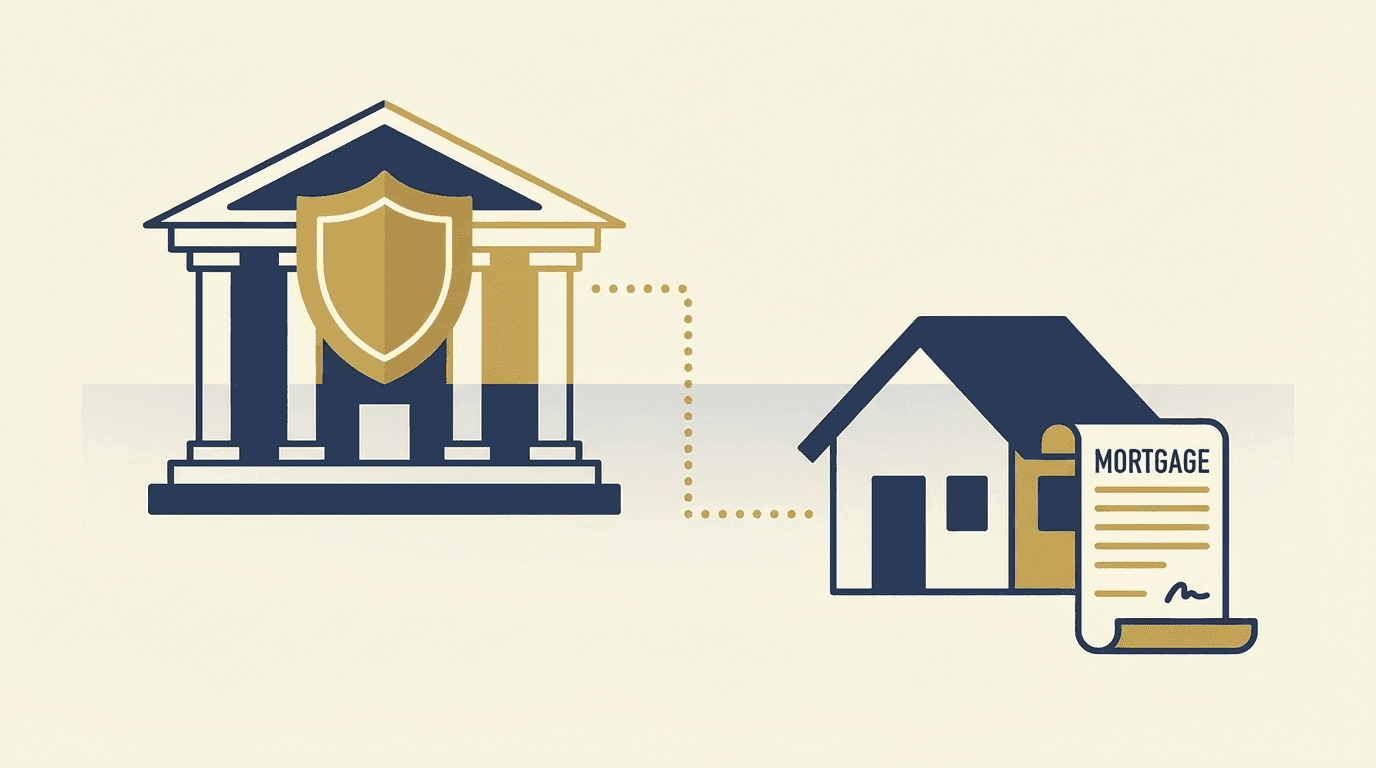
Lender title insurance — also called a mortgagee policy or lender's title policy — is an insurance policy that protects your mortgage lender's financial interest in your property from closing until the loan is paid off.
When a bank lends you $650,000 to buy a house, that loan is secured against the property. The bank's security depends entirely on the title being clean — meaning you actually own the property free and clear of any prior claims that could challenge that security.
If a title problem surfaces later — an undisclosed heir, a forged deed from the prior owner's estate, a lien that never got released — the lender's policy kicks in to protect the bank's interest. It covers their loan amount, not your equity.
The policy stays in force for the life of the loan. When you pay off the mortgage, the lender's policy terminates. If you refinance, your new lender requires a new policy.
What It Covers
The lender's title policy protects against defects in the chain of title — problems that existed before your closing date but weren't caught during the title search. Common claims include:
Prior liens. A contractor who filed a mechanics' lien, a judgment creditor who attached the property, or a tax lien that wasn't fully released. If any of these are missed, the lender's policy covers the bank's exposure.
Forged or fraudulent documents. A deed signed with a forged signature somewhere in the prior history of ownership. This is rarer than people think, but it happens — especially in older properties with long transfer histories.
Missing heirs. If a prior owner died and the property transferred without properly accounting for all heirs, one of those heirs could make a claim. The lender's policy protects the bank if that happens.
Errors in public records. Incorrect legal descriptions, names recorded wrong, misfiled documents. The title search is designed to catch these, but it's not infallible.
Survey or boundary errors. Issues with how the property boundaries are legally described that could affect the lender's security interest.
What the lender's policy does not cover is anything that happens after your closing date, and — critically — anything related to your equity or your ownership interest as the buyer.
What It Costs in Virginia, Maryland, and DC
Lender title insurance is a one-time premium paid at closing. There's no annual renewal. The amount is based on the loan amount, not the purchase price — which means it's typically less than an owner's policy on the same transaction.
Virginia: Title insurance rates are set by state regulation. In 2026, the lender's title insurance rate in Virginia runs roughly $2.50–$3.00 per $1,000 of loan amount for the first tier, with a declining rate structure as the amount increases. On a $500,000 loan, expect to pay somewhere in the range of $1,200–$1,500 for the lender's policy alone.
Maryland: Maryland title insurance is also filed-rate, but rates vary slightly by underwriter. On a $500,000 loan, you're typically looking at $1,000–$1,400 for a lender's policy.
DC: The District uses a similar rate structure. Expect approximately $1,100–$1,500 on a $500,000 loan, again depending on underwriter.
These figures shift based on your specific loan amount, the underwriter, and simultaneous purchase pricing (more on that below).
One important note: When you buy both a lender's policy and an owner's policy at the same closing, you typically pay a simultaneous issue rate — a discount on the second policy. This is standard practice, and it's one of the reasons buying owner's coverage at the time of purchase is significantly cheaper than buying it separately afterward (which generally isn't possible at all).
Who Pays for It
In most DMV transactions, the buyer pays for the lender's title insurance. This is the default in Virginia, Maryland, and DC — it shows up as a line item in your loan estimate and closing disclosure, usually under the "Services You Cannot Shop For" or "Services You Can Shop For" sections depending on whether you've selected your own title company.
It's not negotiable in the sense that it's required — your lender won't close without it. But you can sometimes negotiate with the seller to cover it as part of contract terms, particularly in a buyer's market.
The Critical Distinction: Lender's vs. Owner's Title Insurance
This is the part that matters most for buyers.
Your lender's policy protects the bank up to the loan amount. It does not protect you.
If a title defect surfaces three years after closing — say, a previously unknown lien that clouds your title — the lender's policy covers the lender's interest. You, as the property owner, are on your own unless you also have an owner's title insurance policy.
Owner's title insurance is separate, also issued at closing, and protects your equity and your right of ownership. It's optional (from the lender's perspective), but it covers exactly what the lender's policy doesn't: your financial stake in the property.
The interplay looks like this:
Most title professionals recommend carrying both — the combined simultaneous issue premium is usually modest relative to the protection it provides.
Is lender title insurance the same as homeowners insurance?
No. Homeowners insurance covers physical damage to the property — fire, storms, theft, liability. Title insurance covers defects in ownership history — liens, legal claims, recording errors. They protect against completely different risks and are both typically required at closing.
Do I have to use the title company my lender recommends?
In most cases, no. You generally have the right to choose your own title company for owner's coverage. Your lender may have a list of approved providers for their own policy requirements. Virginia, Maryland, and DC all have consumer protection rules around title company selection.
Can I get lender title insurance without owner's title insurance?
Yes. Owner's coverage is optional. Many buyers purchase only the lender's policy because it's required. Whether that's the right decision depends on your risk tolerance and the specifics of the property.
What happens if the title company misses a defect?
That's what title insurance is for. If a title defect surfaces that should have been caught in the search — or that couldn't have been found in any reasonable search — the insurance covers the cost of defending or resolving the claim. Your lender's policy covers their interest; your owner's policy (if you have one) covers yours.
How long does lender title insurance last?
The lender's policy stays in force for the life of the loan — until the mortgage is paid off in full. If you refinance, a new lender's policy is required for the new loan. The original policy does not transfer or carry over.
DMV Title Guy is the blog of Pruitt Title, a full-service title and settlement company serving buyers, sellers, agents, and lenders across Virginia, Maryland, and DC. Questions about your closing? Contact us before the table.
Need lender's title insurance for a Virginia or Maryland closing? A selected title provider may handle them in Vienna, Herndon, and Bethesda.
Ready to Get a Title Quote?
Send your transaction details through DMV Title Guy. Will can answer initial questions and, when eligible, refer the request to Pruitt Title LLC for review.