
Planning a closing?
Get a local title quote for Virginia, Maryland, or Washington DC.
Get a Title Quote →You're sitting at the closing table, staring at a stack of documents, and somewhere in there are two line items that look nearly identical: lender's title insurance and owner's title insurance.
Same word. Very different purposes. And if nobody's explained the difference, you're not alone — this is one of the most common questions we get from buyers in DC, Maryland, and Virginia.
Here's the plain-English version.
The Short Answer
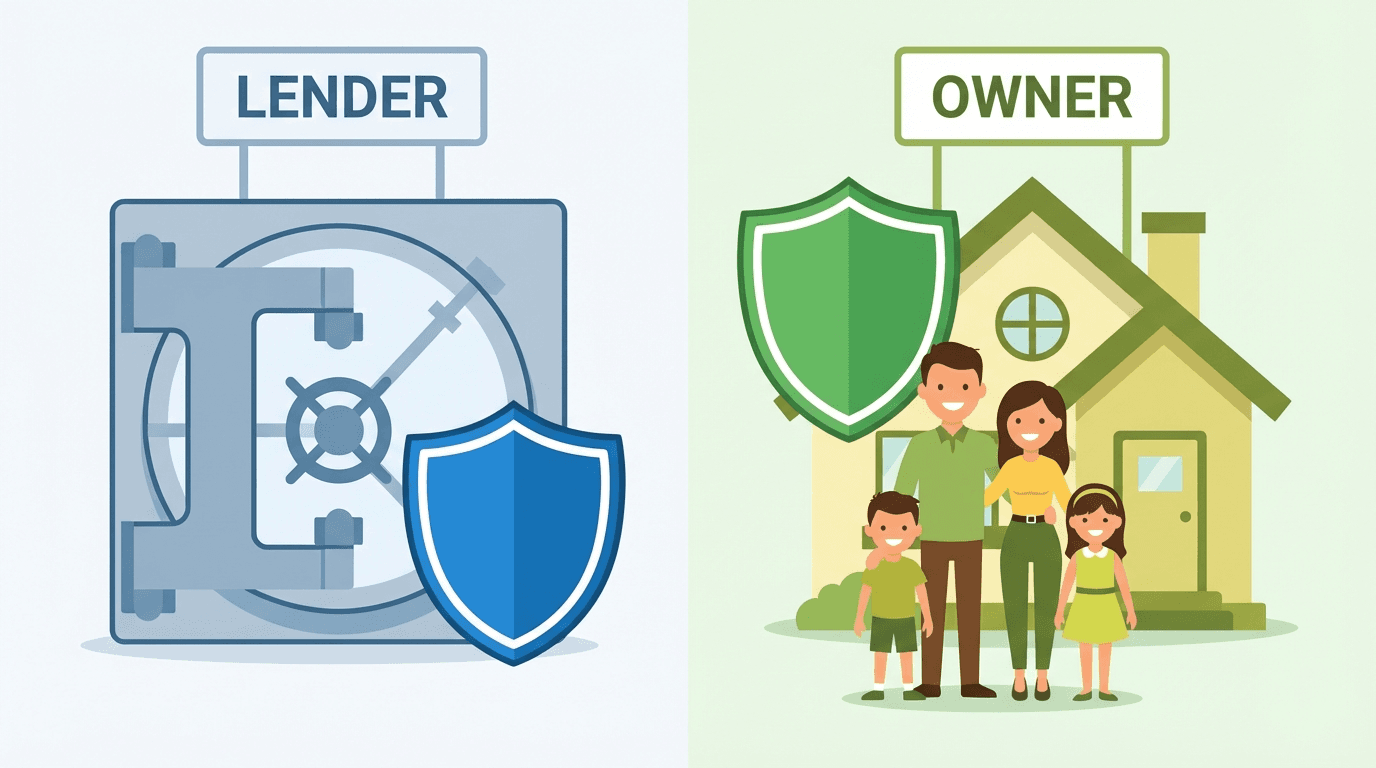
Lender's title insurance protects your mortgage lender if something goes wrong with the property's title.
Owner's title insurance protects "you" — the buyer — if something goes wrong with the property's title.
They're not interchangeable. One is required. The other is optional (but usually worth it).
What Title Insurance Actually Covers
Before we go further, let's make sure we're working from the same foundation.
Title insurance protects against problems with a property's ownership history — things that happened "before" you bought the home. We're talking about:
- Undiscovered liens — a contractor who was never paid, a tax bill that slipped through, a HOA balance the seller didn't disclose
- Ownership disputes — a long-lost heir claiming a stake, a forged signature in the chain of title, a deed that wasn't properly recorded
- Survey errors — encroachments, boundary mistakes, easements nobody knew existed
- Fraud and forgery — identity theft-related title issues are rising in the DMV market right now
Unlike homeowners insurance (which covers future events like fire or flooding), title insurance is a one-time premium that covers your past — everything that happened before you took ownership.
Lender's Title Insurance: The Bank's Protection
When you take out a mortgage, your lender is handing over hundreds of thousands of dollars secured by a property they don't own. They want protection.
Lender's title insurance — sometimes called a loan policy or mortgagee policy — covers the lender's interest in the property up to the outstanding loan balance. If a title defect surfaces and ownership gets disputed, the lender's claim gets covered.
Key facts about lender's title insurance:
- Required in virtually every transaction with a mortgage. If you're financing your purchase, you're buying lender's coverage. This is non-negotiable.
- Covers the lender, not you. You're paying for it, but the policy protects the bank's investment — not your equity.
- Coverage decreases over time. As you pay down your mortgage, the lender's exposure shrinks, and so does the coverage.
- One-time premium paid at closing. No monthly payments — it's folded into your closing costs.
In Virginia and Maryland, lender's title insurance is calculated based on your loan amount. On a $600,000 loan, expect to pay roughly $1,000–$1,500 for the lender's policy, though exact rates vary by state and title company. Title insurance rates are filed with the state — your title company can provide an exact quote based on your transaction.
Owner's Title Insurance: Your Protection
Here's the thing most buyers don't realize until it's too late: lender's title insurance does nothing for you as the homeowner.
If a title defect surfaces — an old lien, a missing heir, a recording error — and you end up in a legal dispute over your property, the lender's policy pays the bank. You're on your own.
That's where owner's title insurance comes in.
An owner's policy protects your equity in the property — the difference between your home's value and what you owe. It covers your legal defense costs if someone challenges your ownership, and it pays out if a covered claim results in you losing all or part of your property.
Key facts about owner's title insurance:
- Optional in most states, including Virginia, Maryland, and DC. But optional doesn't mean unimportant.
- Covers you — not the lender. The policy protects your ownership interest for as long as you own the property.
- Coverage stays constant (or grows). Unlike the lender's policy, owner's coverage doesn't decrease as you pay down your loan. Enhanced policies actually increase with home value appreciation.
- One-time premium paid at closing. Usually a few hundred dollars more than the lender's premium.
- Transfers to your heirs. When the property is inherited, the coverage extends to family members who receive it.
In Virginia, the owner's policy premium is typically modest relative to the purchase price — often $1,500–$2,500 on a $700,000 home — and it covers you for the entire time you own the property.
DMV title services: Vienna, VA | Springfield, VA | Bethesda, MD
Frequently Asked Questions
The Real Question: Should You Skip Owner's Coverage?
We get this question regularly. And the honest answer is: it's a calculated risk. Some buyers, particularly those purchasing new construction where the title history is clean and short, decide to skip owner's coverage. Others skip it when the premium feels steep relative to their overall costs. But here's what we tell buyers in the DMV market specifically: The DC-Maryland-Virginia market has title risk factors other markets don't. High transaction volume with frequent estate sales and inherited properties Dense urban markets with older deed histories and more complicated title chains Significant investment property activity (LLC transfers, tax sales, foreclosures) Rising fraud incidents — wire fraud, deed fraud, and forgery are active concerns in our market A $1,500 decision at closing can save you $50,000 in legal costs if a title dispute surfaces five years from now. When buyers have asked us to look back at past claims, the most common scenario isn't "I knew this was a risk" — it's "I had no idea this problem existed when I bought the house." That's the entire point of title insurance: protecting you from what you don't know. Enhanced vs Standard Owner's Coverage If you decide to get owner's title insurance (and we think you should), you'll also choose between standard and enhanced coverage. Standard coverage covers the classic risks: prior liens, deed defects, forged documents, and ownership disputes from before your purchase. Enhanced coverage (also called an ALTA Homeowner's Policy) covers those risks "plus" several post-purchase scenarios: Building permit violations that existed before you bought Encroachments discovered after closing Zoning violations from prior owners Identity theft targeting your ownership Coverage that increases with home value appreciation For most homebuyers in Northern Virginia, Maryland, and DC, enhanced coverage is worth the modest additional cost — typically 10–20% more than the standard premium.
Who Pays for What in the DMV?
This varies by jurisdiction and negotiation: Virginia: Owner's and lender's title insurance premiums are typically split, or the seller pays the owner's policy as part of the negotiated closing costs. There's no set rule — it's negotiable. Maryland: Similar to Virginia — customarily the seller pays for the owner's policy, but this is market-dependent and negotiable. DC: Buyer typically pays both premiums. DC closing costs run higher overall. Regardless of who pays at closing, both policies are typically disclosed on your Loan Estimate and finalized on your Closing Disclosure. If you don't see them or don't understand them, ask your title company before you close — not after. The Simple Summary Bottom Line Lender's title insurance protects the bank's money. Owner's title insurance protects yours. You'll pay for lender's coverage whether you want to or not — it's a standard mortgage requirement. The real decision is whether you want to extend that same protection to your own equity. For most buyers purchasing in the DMV, our answer is yes. One policy. One premium. Permanent peace of mind on what is almost certainly the largest asset you own. Questions about title insurance at your upcoming closing? Pruitt Title handles settlements across Northern Virginia, Maryland, and DC. We're happy to walk through your specific transaction and make sure you understand exactly what you're paying for — and what it covers. Pruitt Title is a full-service title and settlement company serving buyers, sellers, agents, and lenders across the DC-Maryland-Virginia market. Learn more at dmvtitleguy.io.
Ready to Get a Title Quote?
Send your transaction details through DMV Title Guy. Will can answer initial questions and, when eligible, refer the request to Pruitt Title LLC for review.