
DC closing costs are the highest in the DMV — and the most complex. See exactly what buyers and sellers pay in Washington DC, including the first-time buyer exemption.
Planning a closing?
Get a local title quote for Virginia, Maryland, or Washington DC.
Get a Title Quote →Washington DC has the highest closing costs in the DMV. Not by a small margin — by a significant one. The District charges a recordation tax and a deed transfer tax, and when you add them together on a sale above $400,000, the combined rate hits 2.9%. On a $700,000 purchase, that's over $20,000 in transfer taxes alone, split between buyer and seller.
There are also DC-specific rules that don't exist anywhere in Virginia or Maryland — the first-time homebuyer tax exemption and the Tenant Opportunity to Purchase Act (TOPA) — that directly affect your closing timeline and your bottom line.
If you're working a DC transaction without understanding these rules, you're going to have problems at the table. This guide breaks down exactly what buyers and sellers pay, and how to get an itemized number for your specific file.
Get a title fee quote for your DC closing →
DC Transfer Taxes: The Biggest Number on the Table
DC imposes two taxes on real estate transactions: the recordation tax (paid primarily by the buyer) and the deed transfer tax (paid primarily by the seller). The rates are tiered by sale price:
| Sale Price | Recordation Tax (Buyer) | Deed Transfer Tax (Seller) | Combined Rate |
|---|---|---|---|
| Up to $400,000 | 1.1% | 1.1% | 2.2% |
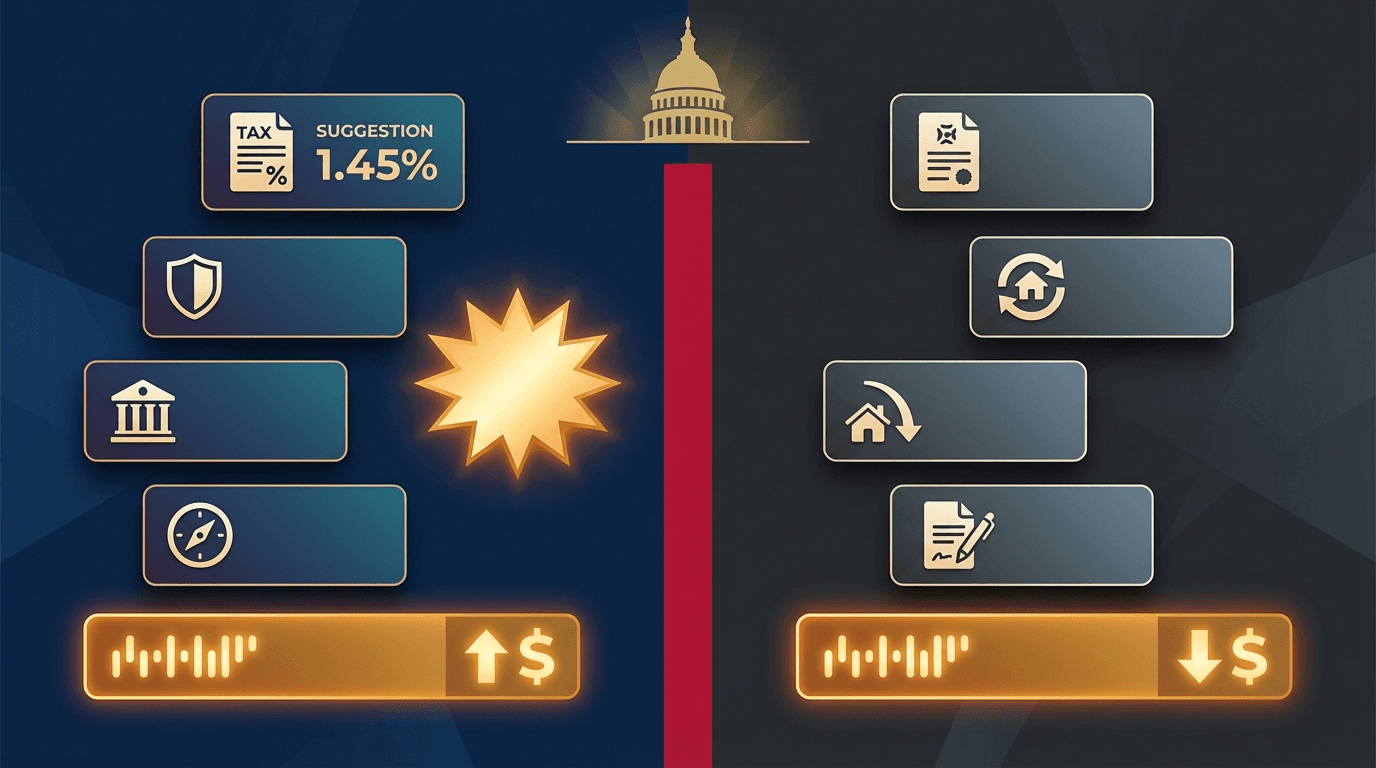
| $400,001 – $2,500,000 | 1.45% | 1.45% | 2.9% combined |
| Over $2,500,000 | 2.9% | 2.9% | 5.8% combined |
Note: DC commercial property has different rates. The figures above apply to residential transactions.
On most DC residential sales — which cluster in the $400K–$1.2M range — the combined transfer tax rate is 2.9%, split roughly equally between buyer and seller at 1.45% each. That is sharply higher than typical Virginia or Maryland effective rates. For a deeper dive into the tax side alone, see our guide to DC real estate taxes.
The DC First-Time Homebuyer Exemption
This is the most significant cost reduction available in DC, and many buyers either don't know about it or assume they don't qualify.
The exemption eliminates the recordation tax for first-time homebuyers purchasing a primary residence in DC at or below $800,000.
Requirements:
- You have not owned residential real property in DC in the 12 months before purchase
- The property will be your primary residence
- The purchase price does not exceed $800,000
A qualified first-time DC buyer on a $700,000 purchase saves approximately $10,150 in recordation tax. That's a material number. It has to be claimed at closing with proper documentation, and the settlement company needs to know you qualify before the Closing Disclosure is prepared.
The exemption does not apply to the deed transfer tax (seller's side) or to investment properties.
TOPA: DC's Unique Tenant Protection Law
The Tenant Opportunity to Purchase Act (TOPA) requires sellers of residential property in DC to notify existing tenants — and in some cases, offer them the right to purchase the property — before selling to a third party.
TOPA applies to:
- All rental properties with one or more tenants
- Single-family homes that are rented (not owner-occupied)
- Condominiums in buildings with tenants in other units
The TOPA process requires the seller to provide a formal offer of sale, then wait out a statutory response period — typically 30 days for tenants to respond, with additional time if a tenant assigns their right to a tenant association or housing organization.
For most owner-occupied properties with no current tenants, TOPA is not a factor. But if there's a tenant — even someone living in the home under an informal arrangement — TOPA compliance is a closing requirement. Missing it can invalidate the sale.
Pruitt Title reviews TOPA compliance for every DC transaction. If TOPA applies to your property, we identify it early and build the timeline accordingly. For more on DC closings, see our page on choosing a real estate closing company in DC.
What DC Buyers Pay at Closing
On a DC purchase, buyer closing costs typically include:
- Recordation tax: 1.45% of purchase price (or waived with the first-time buyer exemption)
- Lender fees: Origination, underwriting, appraisal — varies by lender
- Lender's title insurance: Required by the lender
- Owner's title insurance: Optional but recommended; one-time premium based on purchase price
- Settlement fee: The title company's charge for conducting the closing and handling disbursements
- Prepaid items: Homeowner's insurance, mortgage interest, and escrow reserves
For the difference between the two title policies, see lender's vs. owner's title insurance.
What DC Sellers Pay at Closing
Seller closing costs in DC typically include:
- Deed transfer tax: 1.45% of purchase price
- Real estate commission: Negotiated; typically 2.5–3% per side
- Settlement fee: Paid to the settlement company for coordinating the closing
- Payoff of existing mortgage: Principal balance plus accrued interest and any payoff fee
- Prorated real estate taxes: DC property taxes prorated to the settlement date
- Deed preparation and recording: Typically nominal
Sample Cost Breakdown: $700,000 DC Purchase
| Cost Item | Buyer | Seller |
|---|---|---|
| Recordation tax (1.45%) | $10,150 | — |
| Deed transfer tax (1.45%) | — | $10,150 |
| First-time buyer exemption (if eligible) | -$10,150 | — |
| Lender's title insurance | ~$250–$400 | — |
| Owner's title insurance | ~$1,400–$1,600 | — |
| Settlement fee | ~$400–$600 | ~$400–$600 |
| Lender fees (origination, etc.) | $2,000–$4,000 | — |
| Prepaid items (insurance, escrow) | $2,500–$4,000 | — |
| Real estate commission (3%) | — | $21,000 |
| Mortgage payoff | — | Varies |
These are estimates. Actual costs depend on your lender, your title company, and whether you qualify for the first-time buyer exemption. Get an itemized quote before you're under contract — not at the closing table.
How DC Compares to Virginia and Maryland
Buyers moving between jurisdictions are often surprised. A buyer who last closed in Virginia is used to a much lower transfer tax burden; a Maryland buyer will find DC's combined rate higher than most Maryland counties. If you're comparing markets, our Virginia closing costs guide and Maryland closing costs guide lay out the same numbers for each state.
DC also records deeds differently: through the DC Recorder of Deeds, a District government office — not a county circuit court clerk like in Virginia. The process, fee schedule, and turnaround times differ, and your title company should be filing there routinely, not learning on your file.
Frequently Asked Questions
What are the total closing costs for a buyer in Washington DC?
For a buyer purchasing at $700,000 without the first-time homebuyer exemption, total closing costs typically run $16,000–$20,000, with the recordation tax ($10,150) being the largest single item. Buyers who qualify for the DC first-time homebuyer exemption can eliminate the recordation tax entirely, reducing total costs to roughly $6,000–$10,000 depending on lender fees.
Who pays the transfer tax in Washington DC?
Both buyer and seller pay a portion of DC's transfer taxes. The buyer pays the recordation tax (1.45% on sales between $400K and $2.5M). The seller pays the deed transfer tax (1.45% on the same range). By contract, these can be negotiated differently, but the standard split is buyer pays recordation and seller pays deed transfer.
What is the DC first-time homebuyer exemption and how do I qualify?
DC waives the recordation tax for buyers who have not owned residential property in the District in the prior 12 months, are purchasing their primary residence, and are paying $800,000 or less. The exemption must be claimed at closing — your settlement company documents your eligibility as part of the closing package. You cannot claim it after the fact.
What is TOPA and does it affect my DC closing?
TOPA — the Tenant Opportunity to Purchase Act — requires DC sellers to notify tenants and give them the right to buy the property before accepting a third-party offer. If the property is owner-occupied with no tenants, TOPA typically does not affect your closing. If there is a tenant — including in a single-family rental — TOPA compliance is required, and the process adds time to your closing timeline.
Is owner's title insurance required in Washington DC?
No, owner's title insurance is not required in DC. Lender's title insurance is required by most mortgage lenders. Owner's title insurance is the buyer's choice — it protects your equity from title defects discovered after closing. Given DC's complex property history, condo conversions, and estate sales, it's reasonable protection for a one-time premium. Ready for real numbers on your DC file? Get your itemized DC closing cost quote → Pruitt Title | DMV Title Guy — Serving buyers, sellers, and agents across Washington DC, Northern Virginia, and Maryland.
Ready to Get a Title Quote?
Send your transaction details through DMV Title Guy. Will can answer initial questions and, when eligible, refer the request to Pruitt Title LLC for review.